How Hot Is Too Hot for a Baby Outside? Safe Temperature Guide
Find out the exact heat-index thresholds for a safe outing, when babies start regulating their own body temperature, and the warning signs of overheating to watch for. You'll also find practical tips on prepping for any warm-weather outing.




Updated October 6, 2026
AI Summary


A heat index of 90°F (32°C) or higher is generally considered too high for babies when outdoors, putting infants at real risk of heat stress. However, determining exactly how hot is too hot for your baby outside depends on humidity, how long you're out, and how prepared you are before you leave the house.
Babies handle heat very differently than you do, and summer plans can turn from fun into a real worry fast if you don't know what to watch for. This guide breaks down the exact temperature and heat-index thresholds, when babies start regulating their own body heat, and the warning signs of overheating you shouldn't ignore.
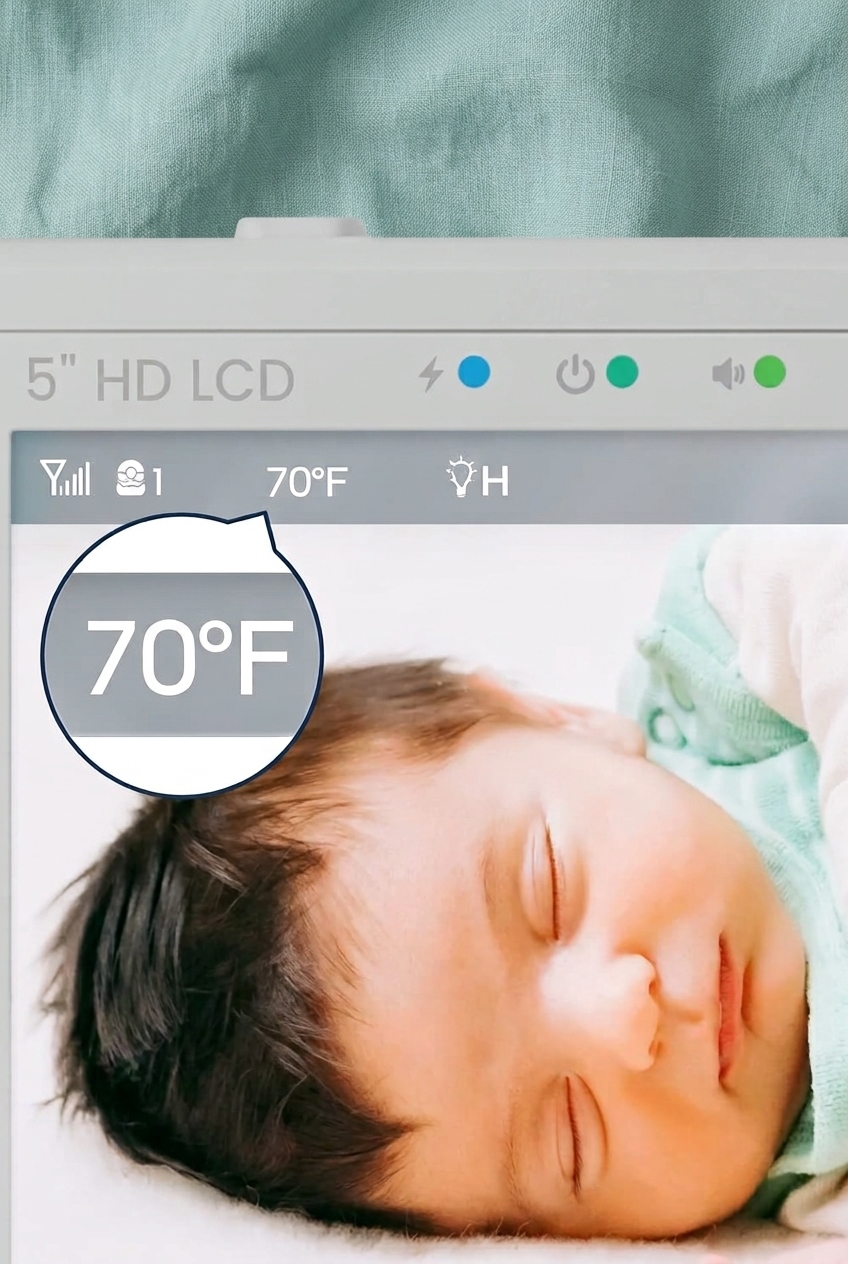
Keep an Eye on Every Nap
Monitor your baby and nursery temperature with a hack-free Babysense non-Wi-Fi video monitor.
Why Babies Overheat Faster
Newborns sweat less than adults and can't tell you when they're hot. They also have proportionally more body surface area to absorb heat through, about three times more than an adult relative to their weight [1]. Their smaller blood volume also means they show signs of dehydration quickly. Together, these factors make babies heat up quicker than you do and cool down much more slowly.
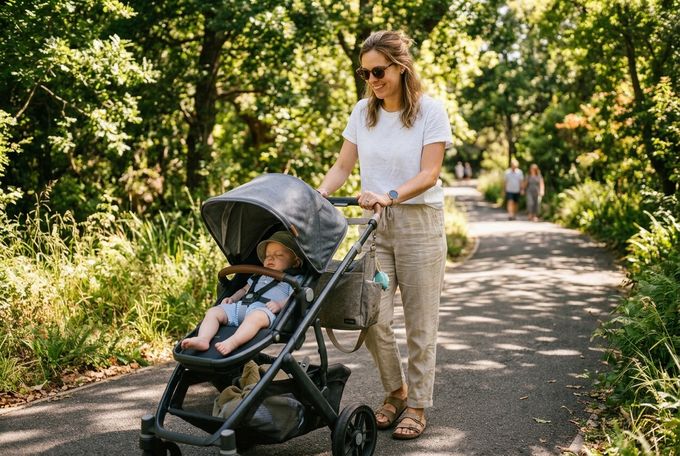
But that doesn't mean a baby has to stay indoors all summer. When you can take a newborn outside comes down to conditions more than age. Avoid peak midday sun, extreme heat, and long stretches without shade, and short outings are fine from the first days home.
» Planning a trip with a young baby? Check out these tips for traveling with a newborn.
When Can Babies Regulate Their Own Body Temperature?
There's no single milestone day when a baby's internal thermostat switches on. Thermoregulation develops gradually over the first several months, and newborns in particular are still adjusting to life outside the womb [2].
Premature and low-birth-weight babies take even longer, since they often have too little body fat to hold their own temperature steady, even in a warm room [3].
In practice, this means you're doing a lot of the temperature regulation work for your baby well past the newborn stage. Dressing baby appropriately, watching the heat index, and staying alert to warning signs all matter more than waiting for an age cutoff.
As babies grow, gain body fat, and develop more efficient sweating and circulation, they get better at handling temperature swings on their own. It's a gradual shift, not a switch that flips at any particular week or month.
Safe Temperature and Heat-Index Guide
The CDC flags infants as a higher-risk group for heat-related illnesses [4]. What's more, research shows that emergency department visits from heat stress increased by 170% in children from 2012 to 2023 [5]. This means it's essential for parents to be mindful of outdoor conditions.
But what temperature is too hot for babies outside?
Here's how it breaks down:
Temperature/Heat Index | Risk Level | Recommended Action |
|---|---|---|
Below 80°F (27°C) | Low | Use shade and a brimmed hat |
80–89°F (27–31°C) | Moderate | Monitor baby's skin, offer feeds more often |
Heat index of 90°F (32°C) and above | High | Stay indoors or limit to a few shaded minutes, watch for signs of distress |
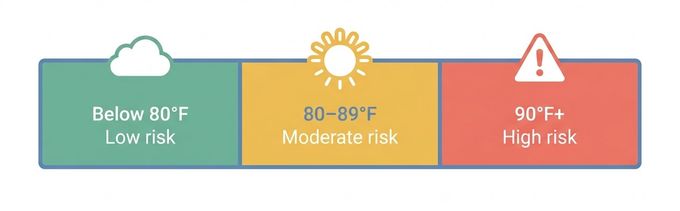
The National Weather Service recommends keeping a close eye on the heat index, not just the temperature reading, for warm-weather outings [7]. The heat index combines air temperature with humidity, so a muggy 85°F day can feel like it's well into the 90s.
If you live somewhere humidity tends to run high, managing high-humidity days takes a slightly different approach than dry heat does, since sweat can't evaporate as easily to cool baby down.
How to Prepare for Warm-Weather Outings
A little planning goes a long way on hot days. Before you head out, run through this list:
- Time it right: Walk before 10 am or after 4 pm, when UV and temperatures are lower.
- Dress light: Use a single breathable cotton layer, and shield your baby's face with a broad-brimmed sun hat.
- Shade the stroller: Clip on a UPF-rated canopy, and avoid draping thick blankets that trap heat.
- Hydrate: Offer breast or bottle feeds every 15 to 20 minutes. Babies under six months should not have plain water unless advised by a pediatrician.
- Pack a cooling kit: A misting bottle, a small battery-powered fan, and a wet muslin swaddle can make a big difference if things get warm mid-outing.
Once you're back inside, don't swing the AC to the opposite extreme. Keeping the nursery within recommended indoor temperature ranges helps baby's body adjust gradually instead of jumping from one temperature extreme to another.
Warning Signs of Overheating
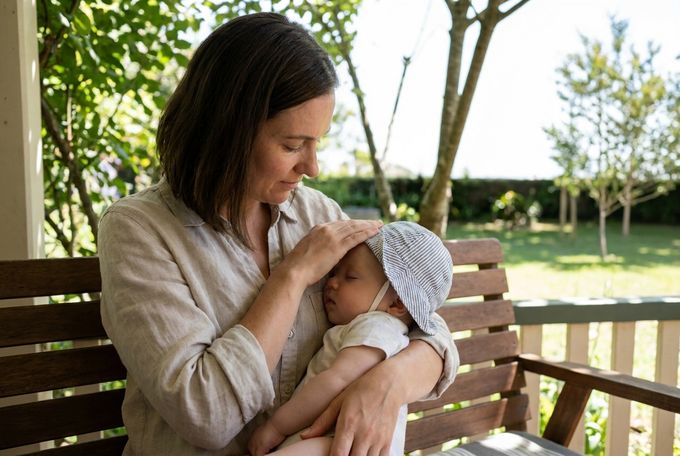
Learning how to tell if a newborn is too hot allows parents to act fast if needed. Here's what to watch for:
- Flushed or unusually pale skin
- Damp hair or clothing from heavy sweating
- Irritable crying or unusual fussiness
- Lethargy, limpness, or vomiting
- Dry skin combined with a fever over 100.4°F (possible heat stroke)
Rapid breathing can be tricky to judge on its own, since what's normal for infant breathing already varies quite a bit by age. A Babysense breathing motion monitor uses under-mattress sensor pads to track your baby's respiratory movements. It detects changes in real time and alerts you as soon as something's off.
Keeping Baby Comfortable, Inside and Out
Knowing how hot is too hot for a baby outside comes down to a few simple habits. Check the heat index before heading out, time outings around the sun, and be on the lookout for any signs of overheating. None of it requires guesswork once the thresholds are second nature.
The same watchfulness matters once you're back indoors, too. Nursery temperatures can creep up fast, including overnight, and it's not always obvious from the hallway.
That's where a reliable video baby monitor like the Babysense PRO becomes invaluable. Its built-in temperature sensor displays live nursery conditions right on the parent unit and sends a real-time notification the moment things start climbing, so you catch it before your baby does.
References
1. Kridler, J. (2021). Can babies sweat? (And other things to know about babies and heat). Henry Ford Health. https://www.henryford.com/blog/2021/07/babies-and-heat
2. UT Southwestern Medical Center. (2023). Not too hot, not too cold: Keeping newborns at just the right temperature. Your Pregnancy Matters. https://utswmed.org/medblog/newborn-temperature-regulation/
3. Children's Hospital of Philadelphia. (n.d.). Warmth and temperature regulation. https://www.chop.edu/pages/warmth-and-temperature-regulation
4. Centers for Disease Control and Prevention. (n.d.). Heat risk factors: Infants and children. CDC Heat & Health. https://www.cdc.gov/heat-health/risk-factors/infants-and-children.html
5. Merritt, T. A., Bhatia, S., Solomon, C., & Yu, A. (2025). Heat-related illness trends at a pediatric health care system, 2012 to 2023. Academic Pediatrics, 25(6), 102855. https://doi.org/10.1016/j.acap.2025.102855
6. American Academy of Pediatrics. (n.d.). Protecting children from extreme heat: Information for parents. https://www.healthychildren.org/English/safety-prevention/at-home/Pages/Protecting-Children-from-Extreme-Heat-Information-for-Parents.aspx
7. National Weather Service. (n.d.). Heat Forecast Tools. https://www.weather.gov/safety/heat-tools
FAQs
Can newborns be outside in hot weather?
Yes. Short outings are usually fine even for very young babies, as long as you avoid peak heat and direct midday sun. Stick to early morning or evening walks, dress baby in breathable layers, and keep outings brief on the hottest days. Always be on the lookout for any warning signs of overheating.
How can you tell if a newborn is too hot?
Check the back of baby's neck or chest, not their hands or feet, which run cooler naturally. Flushed skin, sweating, and fussiness are early signs. If skin feels hot and damp or baby seems unusually lethargic, it's time to cool them down and check with your pediatrician if symptoms persist.
Is it safe to use a stroller fan?
Yes. Choose one with soft blades or a child-proof cage, clip it where baby can't reach it, and never aim the airflow directly at their eyes for long stretches.
Is it safe to take a baby on car rides during hot weather?
Cars heat up fast, climbing as much as 20°F within just 10 minutes. Pre-cool the car before baby gets in, and never leave an infant unattended, even for a minute and even with the windows cracked.
Can sunscreen replace shade for babies outdoors?
No. Sunscreen is generally recommended for babies older than six months, but shade and protective clothing remain the first line of defense at any age.